
Osiris Studio founder and GRAMMY-winning mastering engineer Michael Graves joins host Lawrence Peryer on The Tonearm podcast to discuss the philosophy, ethics, and craft of restoring historical recordings.
Release Date: March 2026
Host: Lawrence Peryer
Podcast: The Tonearm
Guest: Michael Graves
Print Interview:
https://www.thetonearm.com/putting-the-performance-first-michael-graves-on-archival-audio/
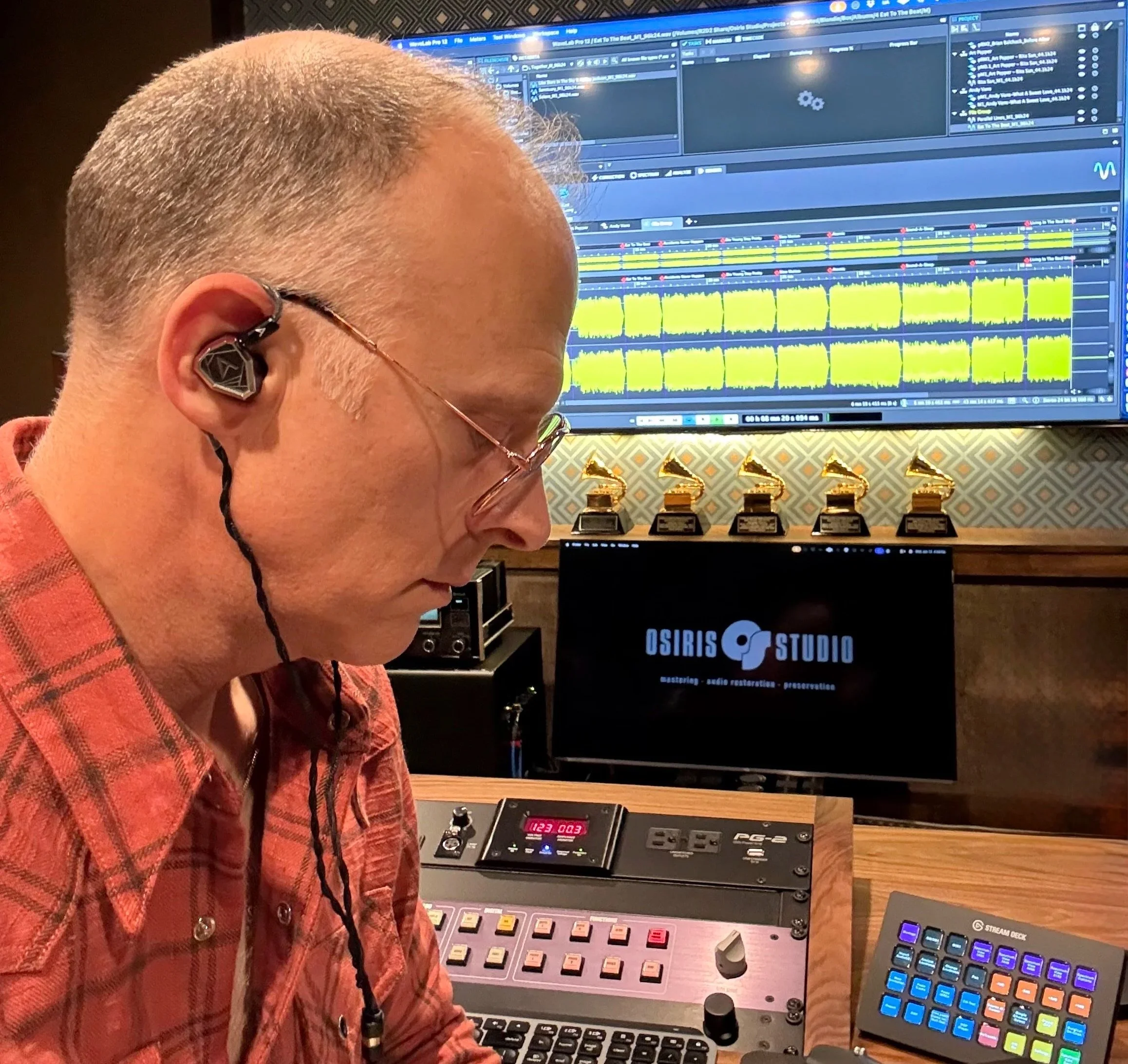
Michael Graves, Osiris Studio mastering room, Los Angeles 2026
For Michael Graves, mastering and restoration engineer and founder of Osiris Studio, audio restoration has always been about something deeper than repairing damaged recordings. At its core, the work is about protecting the original musical performance—removing the distractions introduced by time, fragile media, and technical limitations while preserving the artist’s intent.
That philosophy was the focus of a recent conversation between Graves and host Lawrence Peryer on The Tonearm Podcast. The episode, titled “The Patient Philosophy of Audio Restoration,” explores Graves’ career as a multi-GRAMMY-winning mastering and restoration engineer, his work with historically significant recordings, and the ethical questions that arise when restoring archival audio for modern audiences.
“The goal of audio restoration isn’t to modernize a recording—it’s to reveal the performance that was always there.”
During the interview, Graves reflects on the path that led him into the world of archival audio—from early experiences digitizing rare recordings to founding Osiris Studio, a mastering and restoration facility dedicated to the preservation of recorded history.
Over the years, his work has spanned a wide range of projects, from contemporary mastering to historically significant reissues sourced from fragile analog tapes, acetates, and rare vinyl. Each project presents its own technical challenges, but the guiding principle remains the same: serve the performance first.
Restoring the Performance
A central theme of the conversation is the ethics of audio restoration. Rather than reshaping recordings to meet modern sonic expectations, Graves emphasizes restraint. Restoration is not about rewriting history, but about removing the artifacts introduced by deteriorating media—clicks, noise, distortion, and mechanical damage—so the original performance can be heard clearly.
“The performance always comes first. Everything we do in restoration should serve the music—not the technology.”
The discussion also touches on projects involving artists such as Blondie, Chris Bell, Hank Williams, and the legendary Stax songwriters, along with the technical realities of working with aging media formats that were never intended to survive decades.
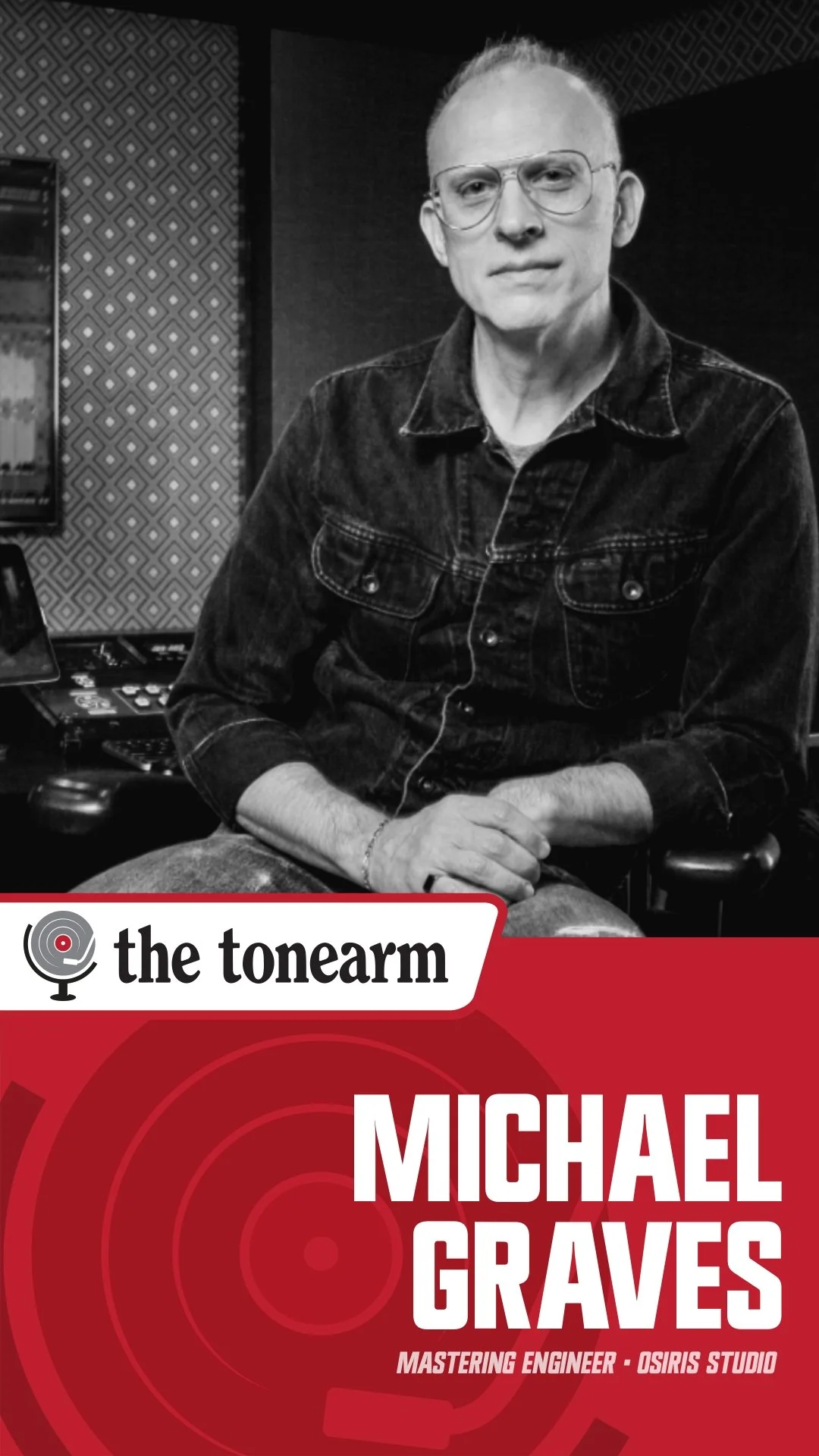
Listeners interested in mastering, archival audio, behind-the-scenes audio production and the philosophy behind audio preservation can hear the full conversation here:
→ Listen to the podcast
https://podcast.thetonearm.com/michael-graves-the-patient-philosophy-of-audio-restoration-osiris-studio/
A companion print interview presents a condensed written version of the conversation, highlighting Graves’ approach to restoration and the responsibilities engineers carry when working with historical recordings:
→ Read the article
https://www.thetonearm.com/putting-the-performance-first-michael-graves-on-archival-audio/
Together, the podcast and written feature provide a deeper look into the philosophy behind the work done every day at Osiris Studio—restoring and mastering recordings so that the performances at their center can be heard clearly by new generations of listeners.