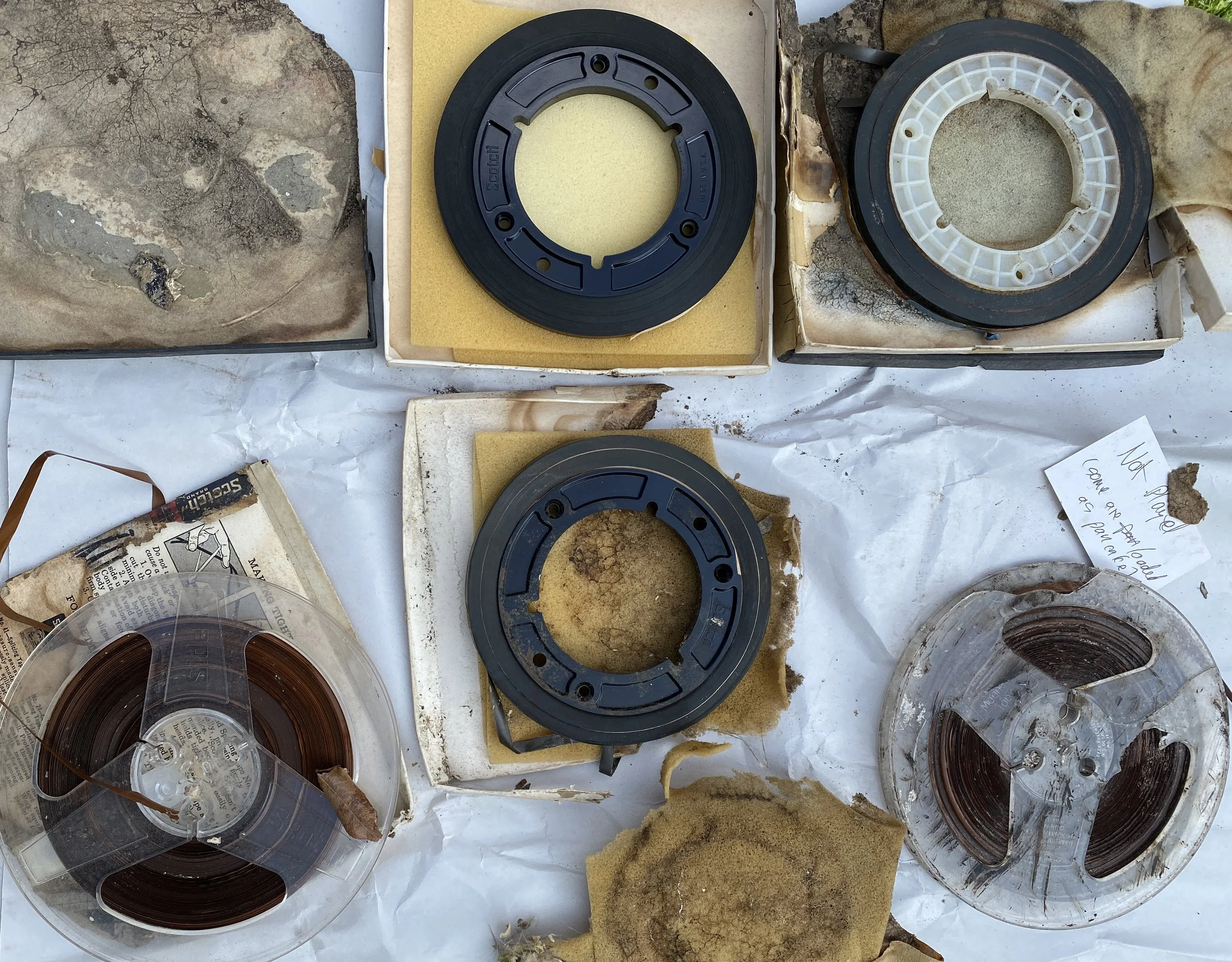
During the late 1980’s, the original analog recordings (most likely ¼” open reel tape and a few cassette tapes) were transferred to DATs (Digital Audio Tape) and the original tapes were thrown away. This wasn’t uncommon. In the early days of digital recording DATs were used to “preserve” older analog recordings because they were small and thus, space savers. Then in the early 2000’s, as it became clear that the shelf life of a DAT was not as long as everyone had hoped, the DATs at East Memphis Publishing were migrated to hard drives to mitigate any further quality loss.
These hard drives are what Cheryl Pawelski was given to work with. After she made copies of the music and what information existed, she started the herculean task of sorting through all that stuff. Thousands of hours of audio, randomly recorded to DAT, some of it Stax and some of it non-Stax. It took her over 17 years to pull all the useable music she thought were original Stax demos to one side. In the end, she had over 650 tracks.
This is where I come in.
Once Cheryl had decided on the songs that she wanted to focus on for a potential boxed set, she asked me to start cleaning them up.
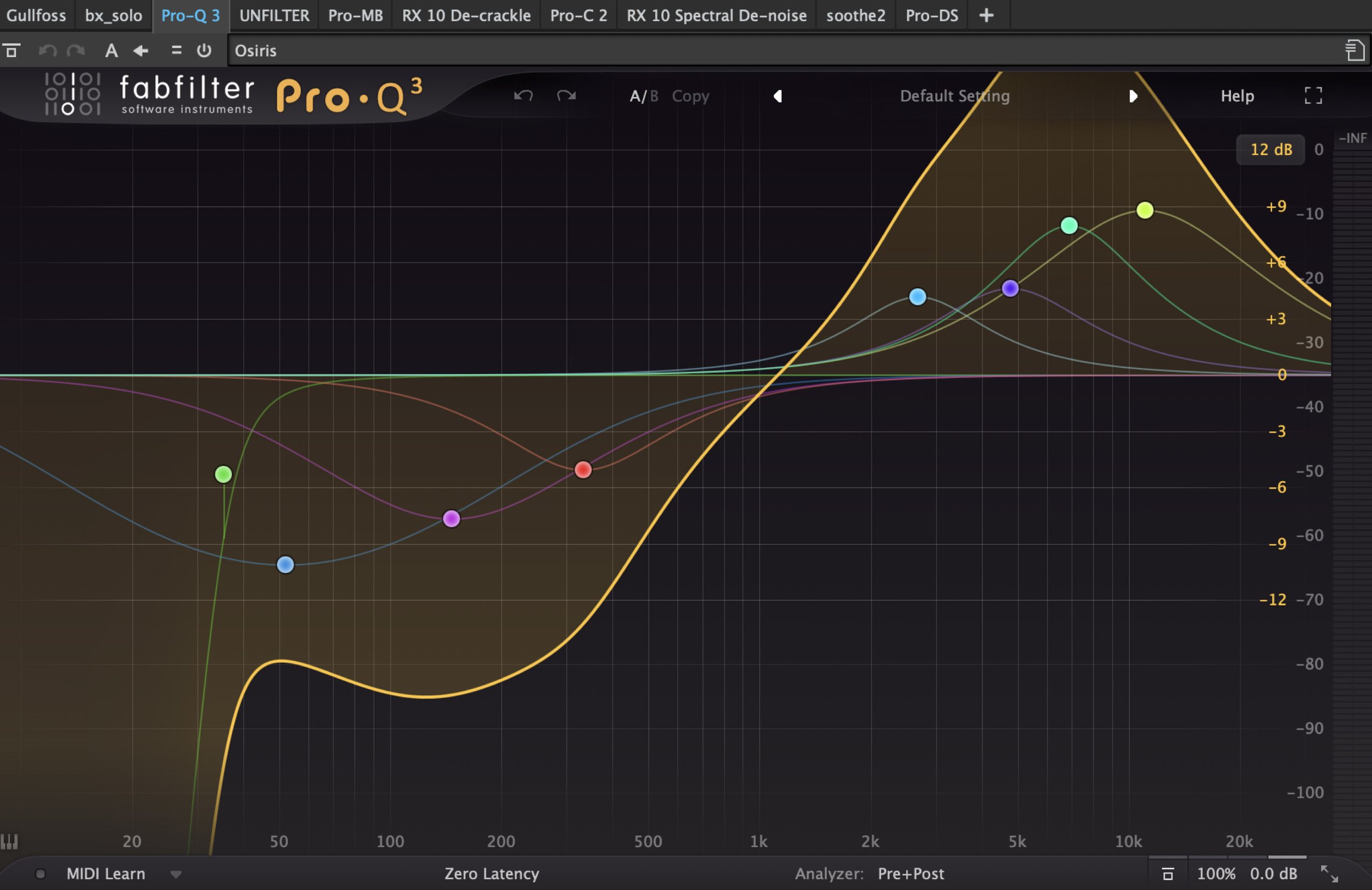
I’ve been restoring and mastering/re-mastering audio since 1998 and I feel like everything I’ve worked on so far in my career has prepared me for this project. Every problem imaginable was present here. It was a “Greatest Hits” of noise issues; distortion, left and right EQ imbalance, intermittent left and right volume imbalance, azimuth issues, dropouts, missing chunks of audio, static, buzz, speed fluctuations, squeals, extreme hiss and broadband noise, digital rot, garbled tape, moldy tape, mud encrusted tape - name your favorite sonic affliction and it was represented here.
Remember that the DAT format during the time of the original transfers was limited to 44.1 kHz, 16-bit PCM digital audio, so that was what I had to work with. Consequently, the issue that was most present across all the files was the thin, digital sound of those early DATs. If you’re familiar at all with the “Stax Sound”, it should be anything but that. Here’s Bobby Manual on the subject: